A Rainy Afternoon in an Unfamiliar Neighbourhood
A rainy afternoon in an unfamiliar neighbourhood need not become a wasted detour. Find a welcoming place to pause, stay comfortable and choose what to do next.
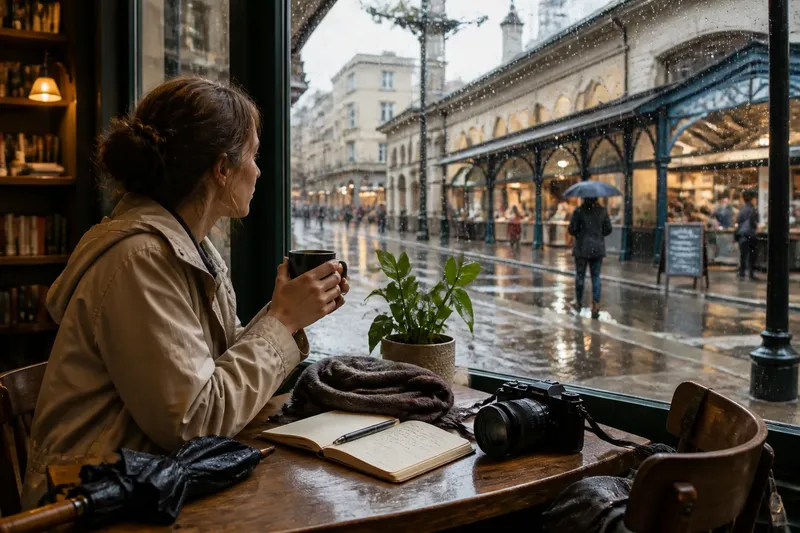
The common mistake on a rainy afternoon in an unfamiliar neighbourhood is to keep walking as though the weather were only a minor inconvenience. It costs you comfort and can leave you hurrying past useful shelter, shops and transport. A rainy afternoon in an unfamiliar neighbourhood is easier to handle when you pause somewhere suitable and decide what comes next once you are dry.
Start with practical needs rather than a search for a memorable scene. Find a place that welcomes visitors, keep walkways clear and check whether your clothes or onward route need attention. A pause can be pleasant, but it should not come at the expense of your comfort or anyone else’s.
Where can you find shelter without getting in the way?
A shop doorway or station entrance may offer immediate cover, but it can leave you blocking people who need to pass. Look for a public library, covered market, arcade, museum foyer or sheltered seating area that is clearly open to visitors. Check any signs and choose somewhere you can sit without occupying a queue, entrance or accessible route.
Search a local map app for terms such as “public library” or “covered market”, then check opening information before walking there. If your mobile data is unreliable, ask at a café counter or hotel desk for a nearby indoor public space. A bus shelter can work while you decide, but it may not be suitable for a longer stay.
There is no need to choose a celebrated building. A neighbourhood library or market hall may be more convenient, provided visitors are welcome and you can use the space without disrupting its usual purpose.
How do you choose a café for a short pause?
The first available table is not always the best place to rest. Before ordering, look for a seat away from the queue, doorway and collection counter, and notice whether the room is set up for quick turnover or longer visits.
If the café is crowded, you could order something simple to take away and use a nearby public seating area where eating and drinking are allowed. A bakery, tea room or market stall on a quieter street may also be a better fit. Keep a damp coat off other chairs, place your bag out of the aisle and ask before taking a seat that appears reserved.
A drink can make a pause more comfortable, but you do not need to keep buying things to justify being in a public place. If you want to sit for longer, a library or public hall may be a more appropriate choice than a busy café.
What should you check before settling in?
These checks can help you choose a place that suits the weather and your needs. Each one pairs an observation with a decision, so you can adjust rather than stay somewhere uncomfortable by default.
- Check whether the space is open to visitors. If signs or staff confirm access, enter; if access is unclear or restricted, choose another place.
- Check whether a seat leaves the entrance, queue and accessible route clear. If it does, settle there; if people must squeeze past, move to a different seat or location.
- Check whether the café welcomes a longer stay. If the room is quiet and no time limit is posted, a short rest may suit; if people are waiting or tables are turning quickly, finish your drink and move on.
- Check whether your clothes are uncomfortably wet or cold. If you can dry off or change a damp layer, do so before sitting; if you cannot get comfortable, shorten the stop or head somewhere warmer.
- Check whether your drink is allowed in the seating area. If eating and drinking are permitted, take it with you; if not, finish it in the café or choose a place where it is welcome.
- Check whether you have a sensible way onward. If a sheltered route or transport stop is nearby, use it when you are ready; if the weather makes walking uncomfortable, choose indoor transport or return to your accommodation.
- Check whether photography is allowed. If signs permit it and no one is being singled out, photograph the building or your own belongings; if rules are unclear or people would be identifiable, put your phone away or ask staff.
How can you reset the plan when rain changes your mood?
Wet clothes and grey light can make a delay feel like a failed plan. Rather than expecting yourself to turn the pause into an activity, deal with what is bothering you first: dry off, get something to eat or rest somewhere warm.
Choose a simple point at which to decide again, such as finishing your drink or waiting until the rain softens. Then choose among continuing, moving to another covered place or heading back. If the rain stays heavy, you do not have to wait it out in one spot.
How can you keep the afternoon local?
Maps and travel lists can turn an unplanned pause into another route to optimise. Resist crossing several exposed streets for a famous café or a place that appears on a travel list. First check what is nearby and comfortable to reach; the closest suitable option may be enough.
Say you are waiting near a tram stop and a map shows a small public arcade a short walk away. You check its entrance, see that it is open to visitors, and choose a kiosk there rather than crossing exposed streets to a better-rated café. You buy a warm drink and sit where you are not blocking the passage. The result is a local pause with a clear next decision: continue along a sheltered route if the rain eases, or take the tram if it does not.
What do travellers ask about rainy pauses?
Is it rude to sit in a café for a long time?
It depends on the café’s layout and customs, so check posted notices and pay attention to the room. If tables are turning quickly or people are waiting, finish your drink and make space; a library or public hall may suit a longer pause better.
What can I do if I do not speak the local language?
Use simple gestures when asking whether a seat or public space is available, and try a translation app for signs or opening information. If you are still unsure about access, ask staff or choose a place with clearer visitor information.
Should I take photographs indoors?
Check signs and ask staff if the rules are unclear, especially in shared places such as libraries and markets. Avoid photographing identifiable people without their permission.
What if the rain does not let up?
Move to another suitable indoor place, use local transport or return to your accommodation if that is more comfortable. You do not need to wait out the whole shower in one spot.
What should you decide before walking on?
Before leaving, check that your route is manageable in the rain and that your clothes are comfortable enough for the next stretch. If not, choose a sheltered route, use transport or stop somewhere warm to dry off. That small practical decision can make the rest of the afternoon easier, without requiring you to turn the pause into an attraction.