The Checklist Trap: When Recording a Trip Gets in the Way of Seeing It
The checklist trap when recording a trip can turn a walk into a task. Choose a few purposeful reminders and leave more room to experience the place.

The checklist trap when recording a trip often starts with a simple mistake: opening your camera before you have looked around. A market, ferry crossing or unfamiliar street becomes a set of images to collect, and the cost is attention to the moment unfolding in front of you.
What makes recording a trip feel like a checklist?
It is the habit of treating each memorable part of a journey as something to document before it can count. A landmark gets a wide shot, a close-up and a picture with you in it; a meal is photographed before anyone takes a bite; a quiet street becomes a series of files rather than a place to walk through.
The problem is not taking photographs or keeping notes. It is the pressure to make a complete record while the experience is still unfolding. Checking the framing, naming the place, choosing a filter or deciding what to post can each draw your attention away from the scene.
You might return with plenty of material and still struggle to recall the air by the harbour, the bus rocking around a bend or the small kindness that made a shop feel welcoming. A camera preserves what it points at, but not necessarily what made the moment personal.
Why can a trip checklist make a day feel like work?
A list quietly changes the purpose of a day. Instead of following curiosity, you start looking for the next item that will make the trip feel complete: the famous view, the special dish, the street sign or the sunset. A missed item can feel like failure, even when the day has been full of good surprises.
Recording can also interrupt the transitions that give a journey its texture. You may be choosing a frame while crossing a square, or editing a note while someone explains which lane leads to the bus stop. These details are not grand attractions, but they can make a place easier to remember.
Even a traveller taking only a few photographs can spend a whole walk deciding which ones are worth taking. The effort is not about the number of files; it is the mental habit of turning an experience into a task to finish.
How can you record a trip without missing it?
Give yourself a small purpose for recording, rather than an obligation to capture everything. Before entering a place, decide whether you want a visual reminder, a written detail or simply time to look around. You can change that choice later; its purpose is to interrupt the automatic reach for your phone.
Notice one specific thing before taking a photograph. It might be a tram bell, laundry above a lane, a station clock reflected in a window or the shape of a pastry on a paper napkin. If you still want a picture afterwards, you know what you are trying to keep.
Keep the method light enough for ordinary moments. A short note in your phone, a voice memo after leaving a busy street or a photograph with a few words about why it mattered can be more useful than a running commentary. Leave room for the rest of the scene.
Which detail should you choose to notice?
Choose something you can actually observe, not a grand theme you feel obliged to explain. A sound, gesture, texture or small change in the surroundings gives your attention somewhere concrete to land. It can also help distinguish one day from another when several places begin to blur together.
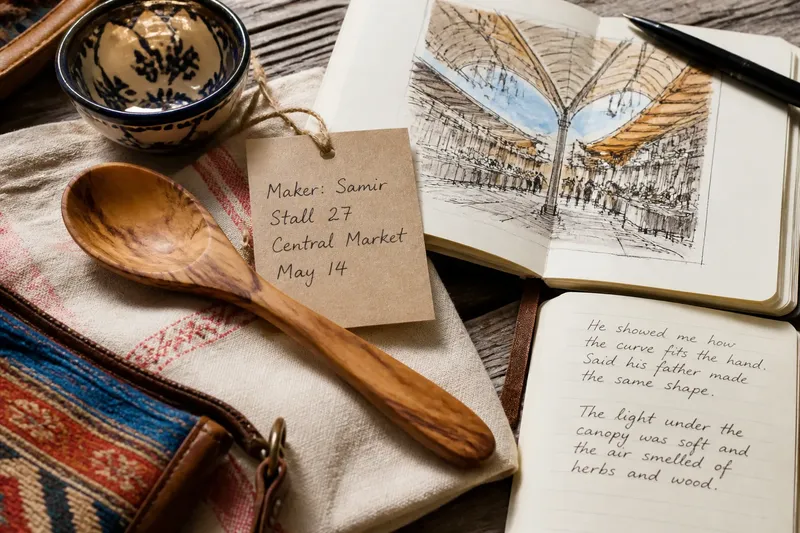
Imagine you enter a covered market with your phone ready to photograph every stall. You notice vendors wrapping herbs in damp paper, so you browse first, then take one picture of the bundles and write “mint on my hands” in your notes app. The result is a reminder of a particular sensory detail, while the rest of the market remains somewhere you experienced rather than a collection you had to complete.
A detail does not need to look impressive on a screen. A chipped blue door, the squeak of a luggage trolley or a hand-painted arrow may bring back the moment precisely because it belongs to the place you were in.
Should you take photographs, write notes or use both?
Use the form that suits the moment and the kind of memory you want to keep. Photographs can preserve colour, arrangement and faces; a written note can hold a sound, thought or context that a picture leaves out. Neither has to serve as the complete record of a day.
For a busy street, a photograph may be quicker than stopping to write. After a conversation or an unexpected change of plans, a sentence in a notebook may carry more than another image. A voice memo can help when your hands are full, though it is considerate to record somewhere you will not disturb others.
You can also leave some moments undocumented. That is not a rejection of memory-making; it is a decision that the experience does not need to become an object right away. If something stays with you, write it down later at your accommodation or during a quiet ride.
How can you keep travel notes without turning them into a diary?
Write fragments rather than a full account. A useful note might read, “station café, burnt coffee, woman lending a pen, platform smelled of rain”. Those cues may bring back a scene more readily than a polished paragraph written when you are tired.
Use a small notebook if you enjoy pen and paper, or keep one note on your phone for the trip. Add the place name only when it will help you find the memory later. If you use a phone, type a few words and put it away instead of opening several apps to sort, edit and share them.
Do not try to make every note meaningful on the spot. An ordinary detail may become vivid later, while a carefully composed observation can feel forced. Record enough to recognise the moment again, then let the day continue.
What do travellers ask about recording a trip?
How many photographs should I take at a landmark?
Take enough to remember what caught your eye; there is no useful target for every place. If you are repeating the same frame without a clear reason, put the phone away and look from a different spot—or leave without another picture.
Is it rude to photograph local people?
Be considerate and follow the rules of the place; a public setting does not automatically make someone a willing subject. If a person is recognisable, ask permission where appropriate, and respect a refusal without turning it into a story or photograph.
What if I forget to record an important moment?
You can write down what you remember later, including what prompted the moment and how it felt. A memory does not become less real because it has no image, and trying to recreate a missed photograph can distract from the next part of your day.
How do I share a trip without posting as I go?
Keep a small selection of pictures or notes and share them after you have had time to look back. That gives you room to choose what you want to tell people, rather than making an audience part of every decision while you are still there.
How can you tell when recording is taking over?
Notice whether documenting is helping you pay attention or repeatedly pulling you away from what is happening. If you are adjusting a shot while your companions have moved on, checking a location tag during a conversation or feeling anxious that a moment has gone uncaptured, take that as a cue to pause.
Make the pause uncomplicated: lower the phone, close the camera app and spend a while looking and listening. You do not need to announce a new rule or recover the time already spent. The next scene is enough to begin again.
It can help to agree on a simple boundary with a travel companion, such as taking pictures before sitting down to eat or keeping phones away during a conversation. Make it easy to adjust to the people and setting, rather than another standard to meet.
What should you check before recording a moment?
Use this quick check when you feel the urge to document everything. Each observation points to a practical choice, with another option if the first does not suit the moment.
- Check whether the scene is changing quickly; if it is, take one quick photograph, then look up, or leave the phone away and watch the moment pass.
- Check whether you can name the detail you want to remember; if you can, capture that sound, colour or gesture, or write a few words instead of taking a broad set of pictures.
- Check whether someone recognisable would appear in the frame; if they have agreed to be photographed, take the picture respectfully, or choose a view without them.
- Check whether you are in the middle of a conversation; if your companion is speaking, put the phone away until they finish, or ask to pause before taking a photograph.
- Check whether the detail is easier to preserve in words than in an image; if it is a sound, smell or thought, make a brief note, or record a voice memo later in a quiet place.
- Check whether you are repeating a frame without a new reason; if you are, stop taking pictures and move on, or change your viewpoint only if that would help you remember something distinct.
- Check whether you are recording for yourself or to post immediately; if sharing is not the point, save the image privately, or leave it undocumented and decide later whether you want to tell the story.
How should you look back at the record you made?
Return to your photographs and notes when you are ready, not because every file needs immediate sorting. Choose a few that bring back a particular encounter or detail, and add a sentence if you can recall what the image does not show. Delete duplicates if you wish, or leave the rest alone; an archive does not have to become an assignment.
The checklist trap when recording a trip is easier to loosen when your record serves your attention rather than competing with it. Let it be partial: a clear sound, a brief note, a picture of a crooked sign or no capture at all. Before you set off tomorrow, choose a simple cue such as “look first”, then let the place offer whatever else deserves your attention.